Brain Inflammation: The Silent Threat to Memory and How to Manage It

Inflammation is one of the body’s most remarkable survival mechanisms. It is designed to protect us from infections and heal injuries. Under normal conditions, this process switches off once the threat is gone. But when inflammation becomes chronic—stuck “on” with no off switch—it can wreak havoc on the body and the brain.
Unlike a sprained ankle or arthritis, brain inflammation does not cause pain. The brain has no pain receptors. Instead, the damage is hidden, chipping away silently at the very organ that defines who we are. Chronic brain inflammation has been linked not only to depression and anxiety, but also to memory loss, brain fog, and Alzheimer’s disease. For caregivers and individuals experiencing mild cognitive impairment (MCI), understanding inflammation may be one of the keys to protecting brain health.
When Inflammation Becomes the Enemy
Chronic inflammation—also called systemic inflammation—develops when unhealthy habits, toxins, or medical conditions fuel the immune system long after it should have shut down. This misplaced response can attack healthy cells, blood vessels, and tissues, eventually impacting the brain.
If chronic inflammation takes hold in the brain, research shows it can cause measurable shrinkage in areas associated with memory and learning—hallmarks of Alzheimer’s disease, the sixth leading cause of death in the United States. On a day-to-day level, brain inflammation shuts down energy production in brain cells, leading to symptoms like fatigue, forgetfulness, slowed thinking, and even depression.
What Fuels Brain Inflammation?
Many factors can activate the brain’s immune cells (microglia), tipping them from protectors to aggressors. These include:
Poor diet, especially one high in refined carbs, processed meats, and sugary beverages.
Chronic stress and poor sleep.
Environmental toxins and pollutants.
Gut imbalances, gluten sensitivity, and digestive disorders.
Health conditions such as diabetes, heart disease, or autoimmune illness.
Even foods we often consider staples—like red meats, dairy, eggs, white breads, and common vegetable oils—can promote inflammation when consumed in excess. Over time, these dietary patterns trick the brain into operating as though under constant threat, starving certain brain regions of energy and triggering long-term damage.
Brain Inflammation and Depression
For decades, depression was thought to be caused by an imbalance of serotonin or dopamine. Yet, new findings suggest brain inflammation itself may be a driving factor. Antidepressants often fail to work because they target brain chemistry without addressing the underlying immune response. If inflammation is at the root, then lifestyle changes—nutrition, stress management, sleep, and physical activity—may be as powerful as medications in restoring mental health.
Turning Down the Fire: Diet and Lifestyle
The encouraging news is that brain inflammation is not permanent. It can be managed, and in many cases, reversed. A growing body of research supports the role of anti-inflammatory nutrition and lifestyle in protecting the brain.
Mediterranean and MIND diets emphasize vegetables, whole grains, legumes, nuts, olive oil, and fish—all rich in anti-inflammatory compounds.
Omega-3 fatty acids, found in salmon, sardines, walnuts, and flax, calm overactive immune responses.
Herbs and spices such as turmeric, ginger, cinnamon, and garlic have measurable anti-inflammatory effects.
Sleep, exercise, and mindfulness are equally important: restorative sleep lowers inflammatory chemicals, moderate exercise improves circulation, and stress reduction practices like yoga or meditation calm the immune system.
Final Thoughts
Chronic inflammation has been called a “silent killer,” but in the brain, it is perhaps better described as a silent thief—stealing energy, memory, and clarity long before dementia is diagnosed. For caregivers and individuals living with MCI, this knowledge can be empowering. It means that choices made today—about food, movement, rest, and stress—can have profound effects on brain health tomorrow.
Practical Takeaways for Brain Health
Here are simple, everyday steps to help reduce brain inflammation:
Eat with purpose – Replace refined carbs and sugary drinks with whole grains, berries, and water.
Choose healthy fats – Favor olive oil, avocados, and fatty fish over fried or processed foods.
Spice it up – Cook with turmeric, ginger, garlic, and cinnamon to naturally lower inflammation.
Move daily – Aim for at least 20 minutes of moderate physical activity most days.
Rest and reset – Protect your sleep, manage stress, and practice relaxation techniques like deep breathing or mindfulness.
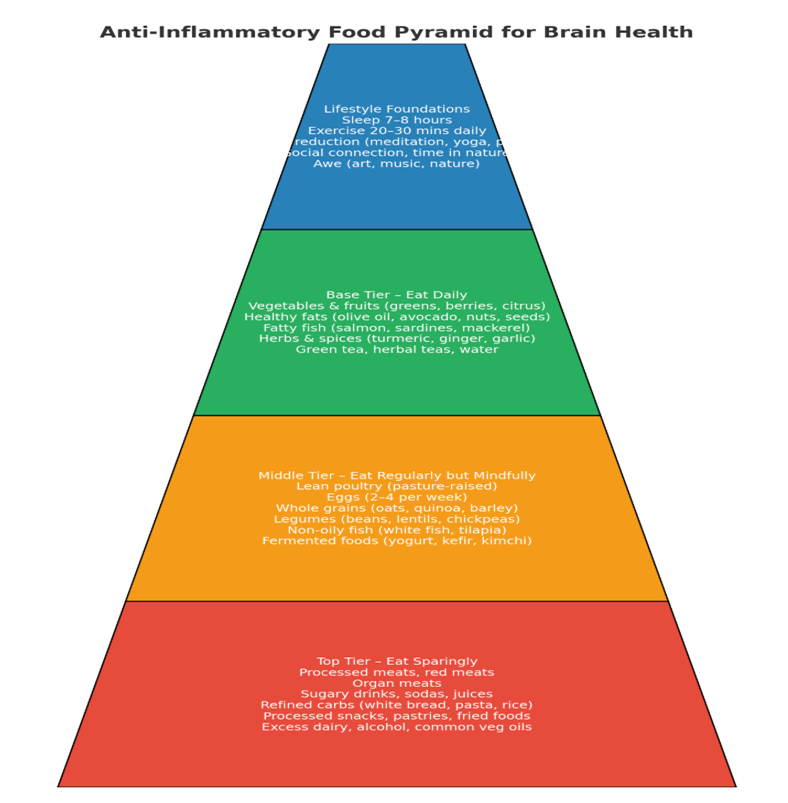
Braintific’s Anti-Inflammatory Food Pyramid for Brain Health
Top Tier – Eat Sparingly (Occasional treats only)
Pro-Inflammatory Foods
Processed meats (sausages, deli meats, bacon)
Red meats & feedlot-raised poultry
Organ meats (liver, kidney, heart)
Sugary drinks, sodas, fruit juices
Refined carbs (white bread, pasta, rice)
Processed snacks, pastries, fried foods
Excess dairy, alcohol, and common vegetable oils (soy, corn, canola)
Middle Tier – Eat Regularly but Mindfully
Moderate Foods
Lean poultry (pasture-raised if possible)
Eggs (2–4 per week, free-range preferred)
Whole grains (quinoa, oats, brown rice, barley)
Legumes (beans, lentils, chickpeas)
Non-oily fish (white fish, tilapia)
Fermented foods (yogurt, kefir, kimchi, sauerkraut for gut health)
Base Tier – Eat Daily
Core Brain-Healthy Foods
Vegetables & Fruits: Leafy greens, cruciferous vegetables, berries, tomatoes, citrus
Healthy Fats: Extra virgin olive oil, avocado, nuts, seeds
Fatty Fish: Salmon, sardines, mackerel, anchovies (wild-caught, rich in omega-3s)
Herbs & Spices: Turmeric, ginger, garlic, rosemary, cinnamon
Beverages: Green tea, herbal teas, plenty of water
Lifestyle Foundations (The “Invisible Base” of the Pyramid)
Healthy Habits That Lower Brain Inflammation
Sleep: Aim for 7–8 hours of restorative rest
Exercise: 20–30 minutes daily, moderate intensity
Stress Reduction: Meditation, yoga, prayer, breathwork
Connection: Social engagement, community, time in nature
Awe: Seek wonder—art, music, or natural beauty all lower inflammation
Tagline:
"Feed your brain, calm the fire. An anti-inflammatory lifestyle can protect memory and reduce dementia risk."